Blog / Product
Why We Believe 3D Modelling Should Be a Conversation, Not a Single Prompt
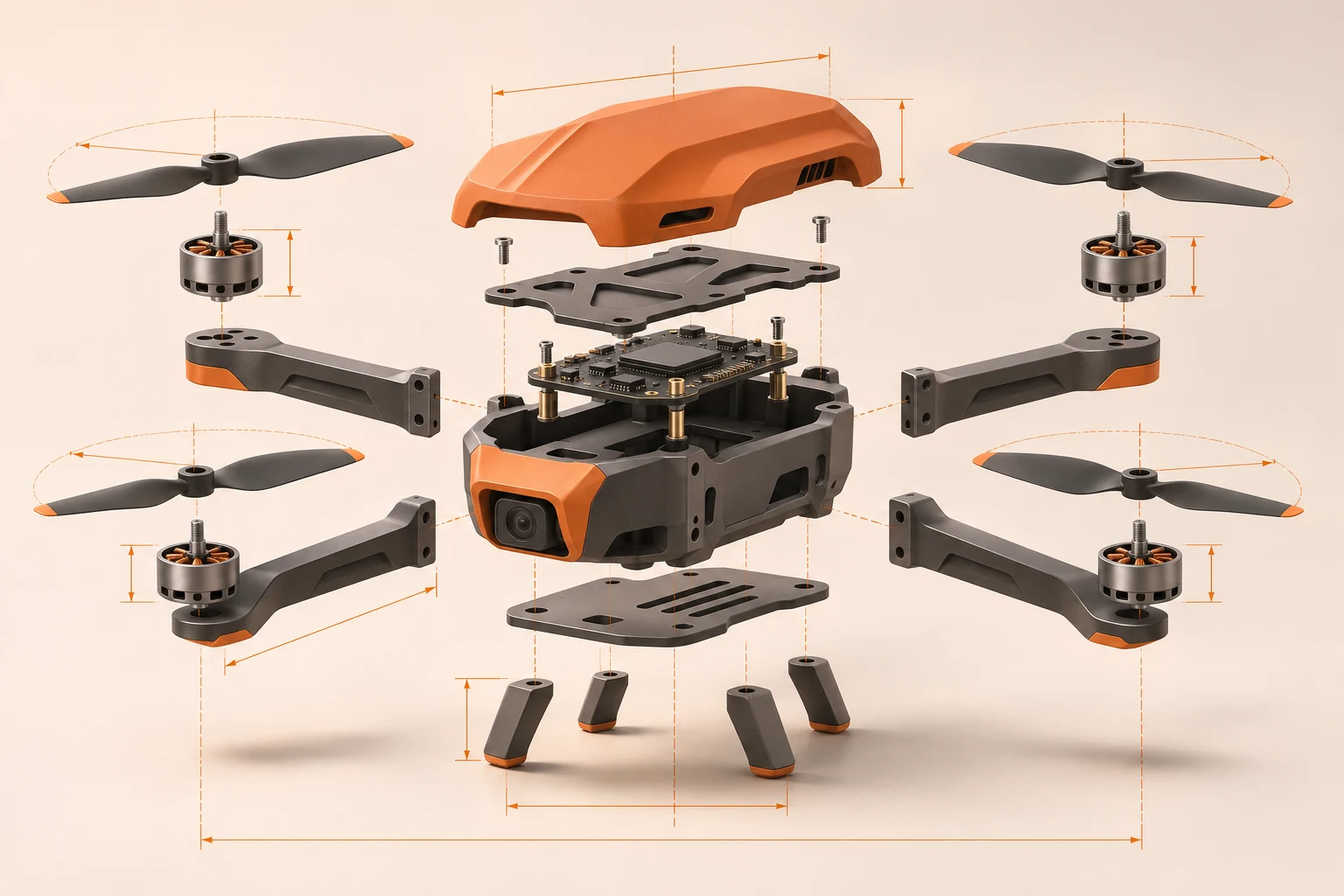
Building Objify around a simple idea: you should have the same level of control over creating a 3D model as a developer has over writing code.
I've spent quite a bit of time using tools like Meshy, Tripo and several other AI 3D modelling platforms. They're impressive, and there's no denying how far the technology has come. Being able to describe something and receive a 3D model in return is something I never thought would be possible when I started my 3d journey.
However, after using these tools myself, I kept running into the same problems.
The problem with generating a single model
One thing I noticed across several platforms is that the output is often treated as one complete object. You give it a prompt, it generates a model, and you end up with a single mesh containing everything.
That might be perfectly fine if all you want is a visual representation of something. But what if you actually want to use the model?
Imagine generating a drone. You might get something that looks like a drone, but the propellers, motors, arms, body and landing gear are all part of one combined mesh. Trying to separate these components, modify individual parts or prepare them properly for 3D printing can quickly become a frustrating process.
This is something we've put very high on our priority list at Objify. We believe that a model shouldn't just look right from the outside. Its construction matters just as much.
We want to make it possible to create models with individually editable components, so you can work on one part without having to rebuild the entire thing. Whether you're preparing something for 3D printing, adjusting a particular component or simply experimenting with different designs, you should have that flexibility.
Of course, this is an area we're continuing to improve, but it's an important part of the direction we're taking.
Why should CAD be any different from coding?
This is probably the bigger reason behind Objify.
Look at how software development has changed over the last couple of years. Developers now have tools like Codex and Claude Code that allow them to work with AI conversationally. They can ask for an initial implementation, inspect the result, request a tiny adjustment, change one particular function and keep refining until everything works exactly as intended.
They aren't limited to writing one prompt and accepting whatever comes out.
So why should 3D modelling be any different?
With most prompt-based 3D generation tools, you describe what you want and wait for the result. If something isn't quite right, you often have to start another generation, rewrite your prompt and hope the next result is better.
You might get something that looks reasonably close to what you imagined, but there's almost always something you'd like to change. Perhaps a component is slightly too large, a hole is in the wrong position, the proportions aren't quite right or you simply want to try a different design.
I don't think you should have to start all over again every time.
I believe CAD should be conversational. You should be able to describe an idea, see it come to life, make adjustments through conversation and keep refining individual details without losing the work you've already done.
That is the experience we're trying to build with Objify.
The model should remain yours
Another thing I think is important is what happens after generation.
A 3D model shouldn't be something you simply receive and then have to accept as it is. You should be able to inspect it, understand how it's constructed, measure dimensions, adjust parameters and make changes yourself.
AI should make CAD more accessible, not take away the control that makes CAD useful in the first place.
We want Objify to be useful to people who have never touched traditional CAD software, as well as people who already have years of experience. Beginners should be able to create things without spending months learning complicated software like most of us had to, while experienced users should still have the tools and flexibility they expect.
Getting that balance right is something we're actively working towards.
Where we're taking Objify
We're still building, testing and improving Objify, and there's plenty of work ahead of us. We know that generating genuinely complex, mechanically accurate models is a difficult problem, and we're not going to pretend that everything is solved already.
But we have a clear idea of what we want to achieve.
We want to move away from the idea that AI 3D modelling is simply about turning a text prompt into a mesh. We see it as a much bigger opportunity: making the entire CAD process more accessible, interactive and flexible.
You should be able to go from an idea to a working model, refine it through conversation and retain control over every detail along the way.
That's what we're building Objify for.